Minimalna głębokość bieżnika opon ciężarówki i naczepy w Europie
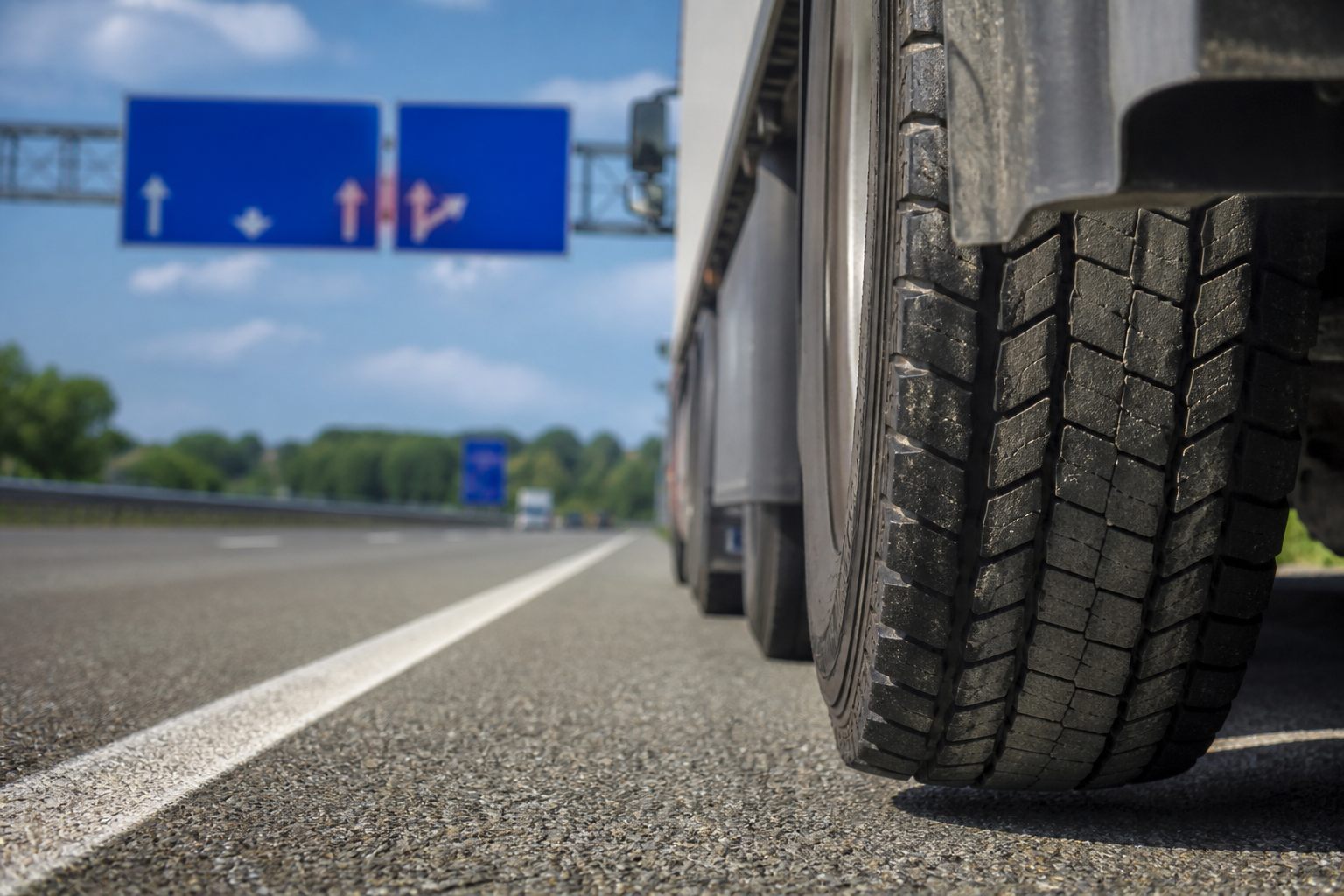
Próg 1,6 mm
W większości krajów europejskich minimum w rowkach głównych to 1,6 mm na obwodzie. To baza na kontrolach na kontynencie. To nie jest minimum krajowe Wielkiej Brytanii (tam inny próg). Trzymaj systemy osobno.
Wszystkie osie i zima
Liczy się cały zestaw. Przepisy zimowe, oznaczenia i daty różnią się między krajami — nie zgaduj na granicy.
Brak zgodności to postój, mandat i strata ładunku. Jeźdź z zapasem powyżej minimum, zwłaszcza na napędzie i skręcie.
Co warto zapamiętać
W dużej części Europy próg to 1,6 mm. Kierowcy transgraniczni muszą też pilnować wymogów sezonowych — bez traktowania każdego kraju tak samo.
Przeczytaj cały artykuł, zanim zastosujesz regułę na drodze. Liczby i wyjątki się zmieniają. Jeśli procedura firmy albo kontrola mówi coś innego niż skrót z internetu, stosuj procedurę na piśmie oraz źródła oficjalne (DVSA, DVLA, GOV.UK i właściwe rozporządzenie).
Przy temacie „Minimalna głębokość bieżnika opon ciężarówki i naczepy w Europie” pamiętaj łańcuch praktyczny: sprawdź przed wyjazdem, zapisuj poprawnie na tachografie albo w dokumentach, zgłoś dyspozytorni, gdy coś się nie zgadza, i nie ruszaj pojazdu, jeśli wiesz, że to nielegalne albo niebezpieczne.
Jeśli kolega, klient albo krótka wiadomość każe pominąć kontrolę, poproś o to na piśmie. Zatrzymanie w terminie i telefon na biurko kosztuje mniej niż mandat, zakaz jazdy albo wypadek.
Ten tekst jest poradnikiem praktycznym dla kierowcy, nie poradą prawną na konkretną sprawę. Gdy tachograf, waga, dokumenty albo stan pojazdu nie zgadzają się z planem dnia, zatrzymaj się i wyjaśnij to zanim ruszysz. Na drodze odpowiedzialność zostaje przy osobie za kierownicą.


Komentarze
Brak komentarzy. Bądź pierwszy.
Zaloguj się, aby komentować.
Zaloguj się