UK HGV Speed Limits: Motorway, Dual Carriageway and Other Roads
What this article covers
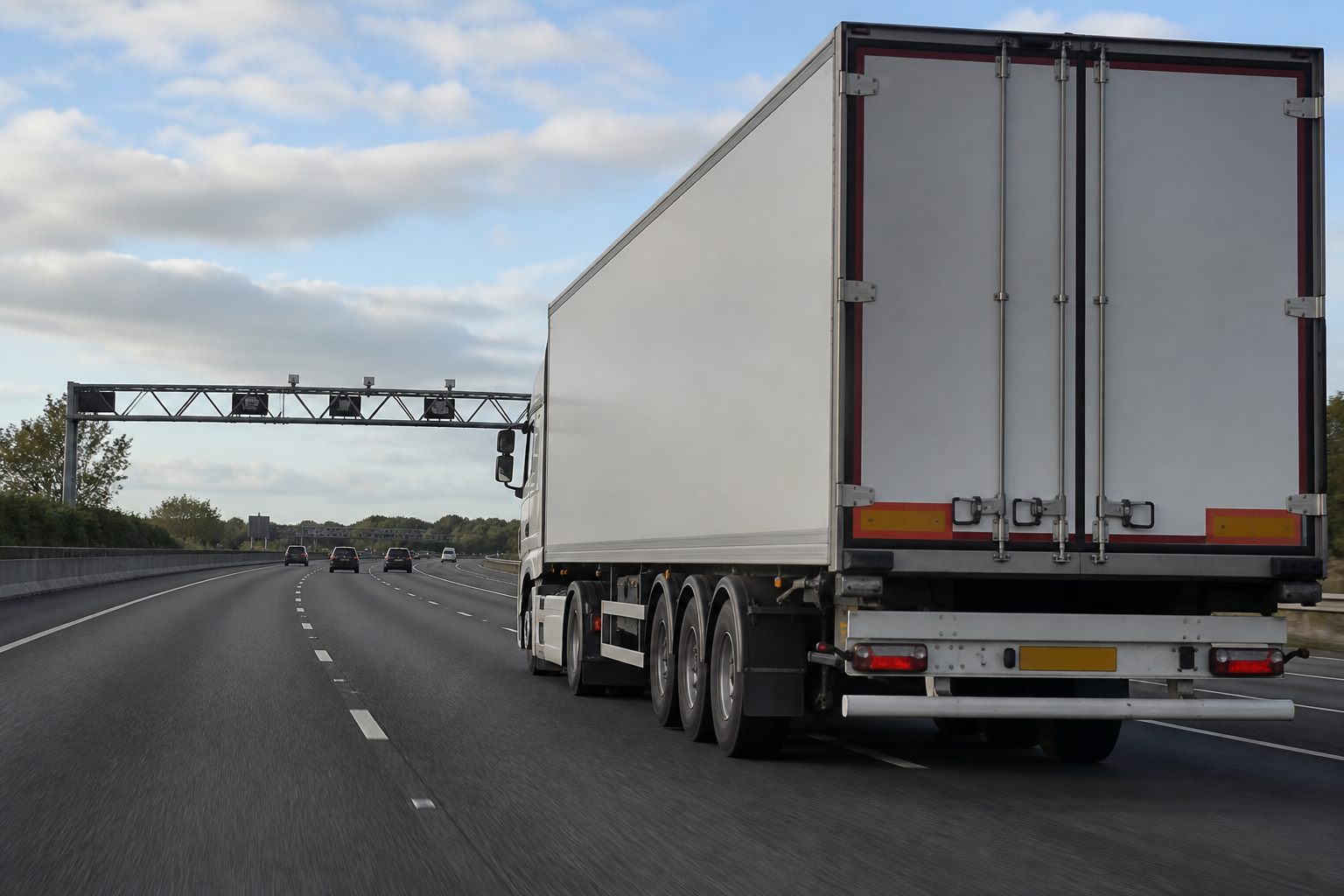
In Great Britain, goods vehicles have national speed limits that often sit below car limits on the same road. This page summarises the usual limits for goods vehicles over 7.5 tonnes maximum laden weight. Always obey signed limits when they are lower, and check the exact class of your vehicle if you drive lighter goods vehicles (different figures apply).
Source framing matches current official sources national speed limit tables — signs and temporary limits still win when posted.
England and Wales (over 7.5t)
- Motorway — 60 mph
- Dual carriageway — 60 mph
- Single carriageway — 50 mph
- Built-up roads (street-lit unless signed otherwise) — usually 30 mph
Scotland (over 7.5t)
- Motorway — 60 mph
- Dual carriageway — 50 mph
- Single carriageway — 40 mph
- Built-up roads — usually 30 mph unless signed otherwise
If your work crosses from England into Scotland (or the reverse), the national limit for that road type can change even when the road “looks the same”.
Speed limiters
Many HGVs are fitted with a speed limiter (commonly around 90 km/h / about 56 mph for relevant categories). The limiter caps top speed — it does not mean you should sit at the pin in rain, fog, or dense traffic. Limits are legal maxima, not performance targets.
Common mistakes
- Assuming car motorway 70 mph applies to your artic
- Using England & Wales dual figures in Scotland (or the reverse)
- Ignoring a temporary works limit because “the limiter allows more”
Driver habit
Know your vehicle class and which nation you are in before the job. When in doubt, slow to the safer figure and read the signs — speeding “because everyone else does” still lands on your licence.
What to remember
Heavier goods vehicles do not use car speed limits. Know the usual figures for England & Wales and Scotland — and treat the limiter as a ceiling, not a cruise target in every condition.
Read the article through before you apply the rule on the road. Figures and exceptions change. If your operator’s procedure or a roadside check says something different from a web summary, follow the written procedure and official sources (DVSA, DVLA, GOV.UK, and the regulation that applies).
For “UK HGV Speed Limits: Motorway, Dual Carriageway and Other Roads”, keep the practical chain: check before you leave, record correctly on the tachograph or in documents, tell planning when something does not add up, and do not move the vehicle if you know it is illegal or unsafe.
If a colleague, customer or short message asks you to skip a check, ask for it in writing. Stopping on time and a call to the desk costs less than a penalty, a prohibition, or a collision.
Comments
No comments yet. Be the first to comment.
Sign in to comment.
Sign in