Banksman and Reversing Assistance: What HGV Drivers Should Agree
What this covers
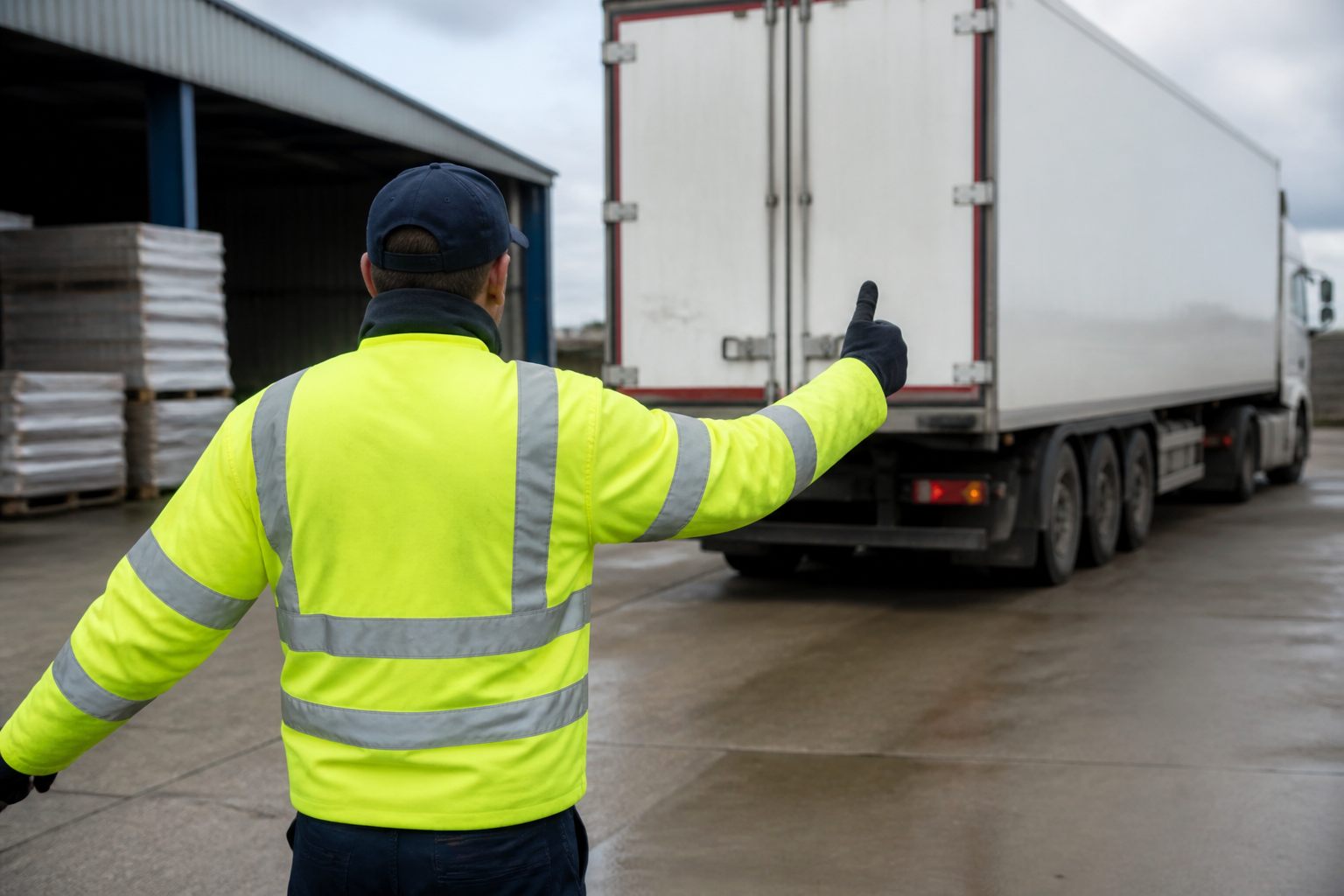
Working with a banksman / reversing assistant on yards and docks. Blind-spot awareness without a banksman is a separate article.
Agree before wheels move
- Who is the single person directing (not three people waving)
- Which signals mean stop, come on, and adjust (site standard or a clear verbal brief)
- Where the banksman will stand so you can see them in a mirror / camera
While reversing
- Crawl speed; stop the instant you lose the banksman or the signal is unclear
- Do not let radio chat replace eyes — if you cannot see or hear the instruction cleanly, stop
- Never let anyone stand behind the trailer in the crush zone “to hurry you”
If there is no banksman
Follow site rules. Where assistance is required and missing, call the site / traffic — do not invent a solo reverse into a live pedestrian area.
After a bang or near-miss
Stop, make safe, report. Do not negotiate blame on the dock while the vehicle is still half in the door.
Driver habit
You own the final decision to move. A banksman advises; you are still responsible for not crushing people or doors.
What to remember
A banksman only helps if you both use the same rules: one director, clear signals, and an immediate stop when you lose sight or confidence.
Read the article through before you apply the rule on the road. Figures and exceptions change. If your operator’s procedure or a roadside check says something different from a web summary, follow the written procedure and official sources (DVSA, DVLA, GOV.UK, and the regulation that applies).
For “Banksman and Reversing Assistance: What HGV Drivers Should Agree”, keep the practical chain: check before you leave, record correctly on the tachograph or in documents, tell planning when something does not add up, and do not move the vehicle if you know it is illegal or unsafe.
If a colleague, customer or short message asks you to skip a check, ask for it in writing. Stopping on time and a call to the desk costs less than a penalty, a prohibition, or a collision.

Comments
No comments yet. Be the first to comment.
Sign in to comment.
Sign in