Tachograph Manual Entries: When Drivers Must Add Them
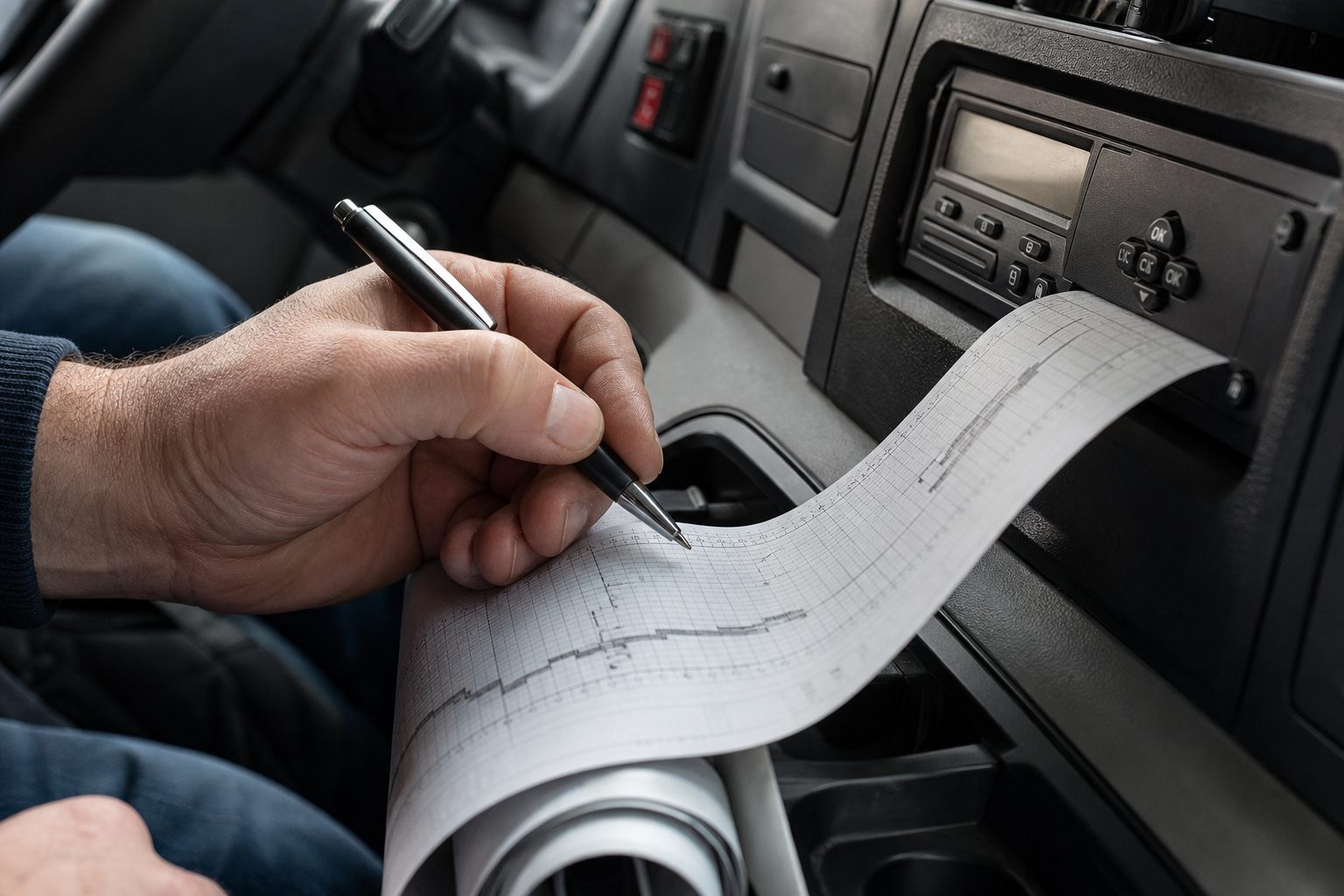
Why manual entries exist
A digital or smart tachograph records what happens while your card is in and the unit can see activities. It does not automatically reconstruct every period away from the vehicle. When the record would otherwise have an unexplained gap, you add a manual entry.
This article is only about when and why to add manual entries — not a full rewrite of ferry rest rules or mode selection.
Situations that commonly require a manual entry
- Start of duty away from the vehicle — other work or availability before you insert the card
- Card out at the end of duty — activities after withdrawal that still need recording under the rules
- Vehicle change — periods associated with leaving one vehicle and taking another
- Ferry or train travel — where manual recording is needed to keep the day explainable alongside the special condition
- Card or equipment faults — with a clear note of what happened and the activities during the fault
Do it while the facts are fresh
Add the entry as soon as practicable. “I’ll fix the chart on Sunday” is how clean days become roadside arguments. A short, accurate manual note beats a long invented story later.
What a good manual entry looks like
- Correct activity type (other work, availability, rest/break as applicable)
- Correct times
- A reason you can still explain weeks later (ferry, vehicle swap, fault code, etc.)
What manual entries are not
- A tool to rewrite illegal driving into legal driving after the fact
- A substitute for inserting your card when you should be driving with a card
- Optional decoration when the gap is obvious on analysis
Driver habit
After any unusual event — ferry, swap, fault, late start with card out — ask: Would an officer understand this day from the download alone? If not, add the manual entry now.
What to remember
The tachograph does not magically know what you did away from the vehicle. Manual entries close those gaps — especially after ferry/train, vehicle swaps, card-out periods and faults.
Read the article through before you apply the rule on the road. Figures and exceptions change. If your operator’s procedure or a roadside check says something different from a web summary, follow the written procedure and official sources (DVSA, DVLA, GOV.UK, and the regulation that applies).
For “Tachograph Manual Entries: When Drivers Must Add Them”, keep the practical chain: check before you leave, record correctly on the tachograph or in documents, tell planning when something does not add up, and do not move the vehicle if you know it is illegal or unsafe.
If a colleague, customer or short message asks you to skip a check, ask for it in writing. Stopping on time and a call to the desk costs less than a penalty, a prohibition, or a collision.


Comments
No comments yet. Be the first to comment.
Sign in to comment.
Sign in