Kontrole DVSA: błędy czasu pracy i tachografu, które kosztują
Dlaczego kontrole łapią błędy zapisu
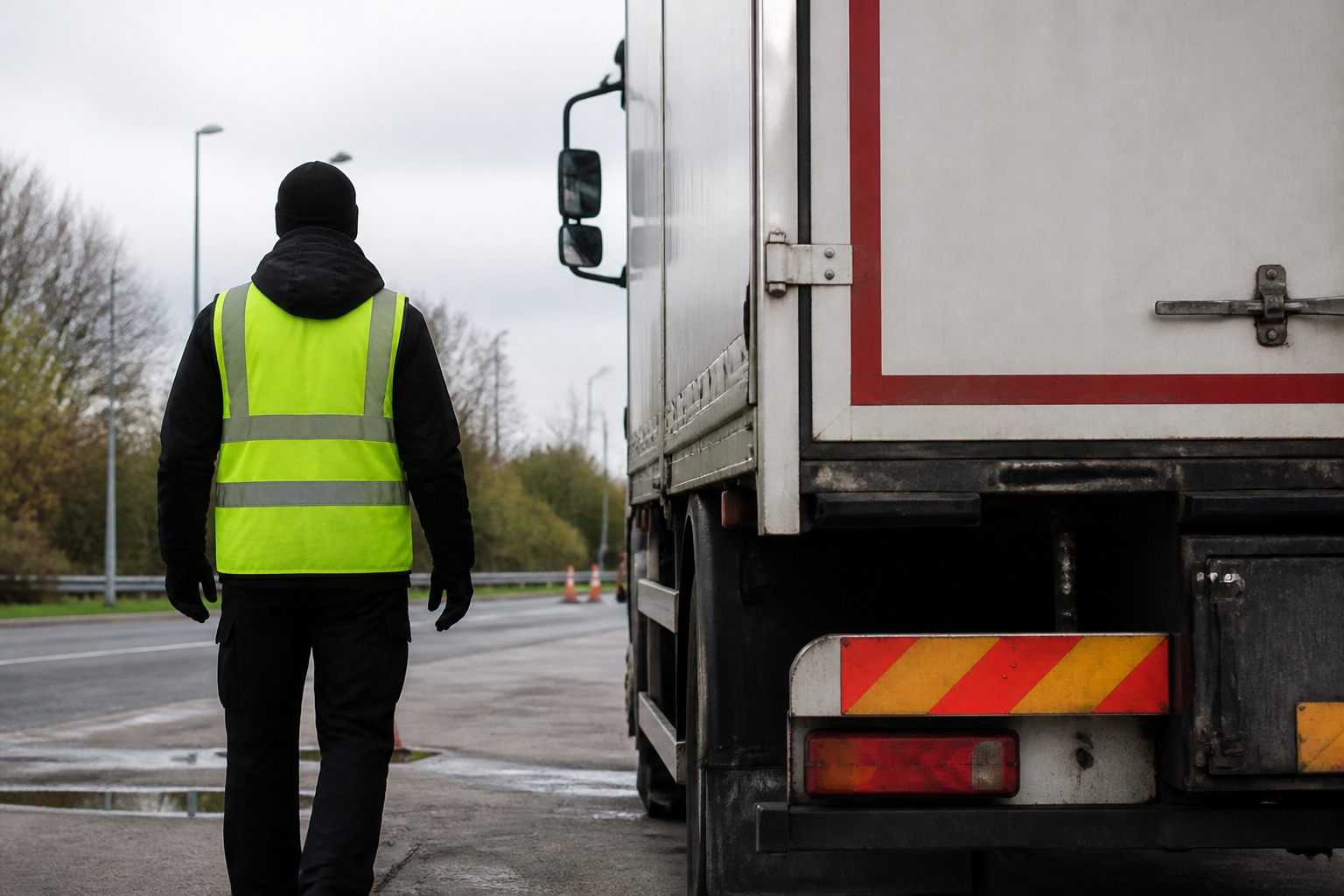
Kontrole DVSA dotyczą stanu technicznego i zgodności z prawem. Przy czasie pracy kierowcy oficerowie sprawdzają, czy zapis tachografu jest kompletny, spójny i wiarygodny — nie czy recytujesz rozporządzenie z pamięci.
Najdroższe skutki biorą się z tych samych problemów: zły tryb, brak wpisów ręcznych, karta kierowcy, dzień którego nie da się wyjaśnić.
Co zwykle sprawdzają najpierw
- karta w szczelinie i czy należy do Ciebie
- tryby zgodne z tym, co naprawdę robiłeś
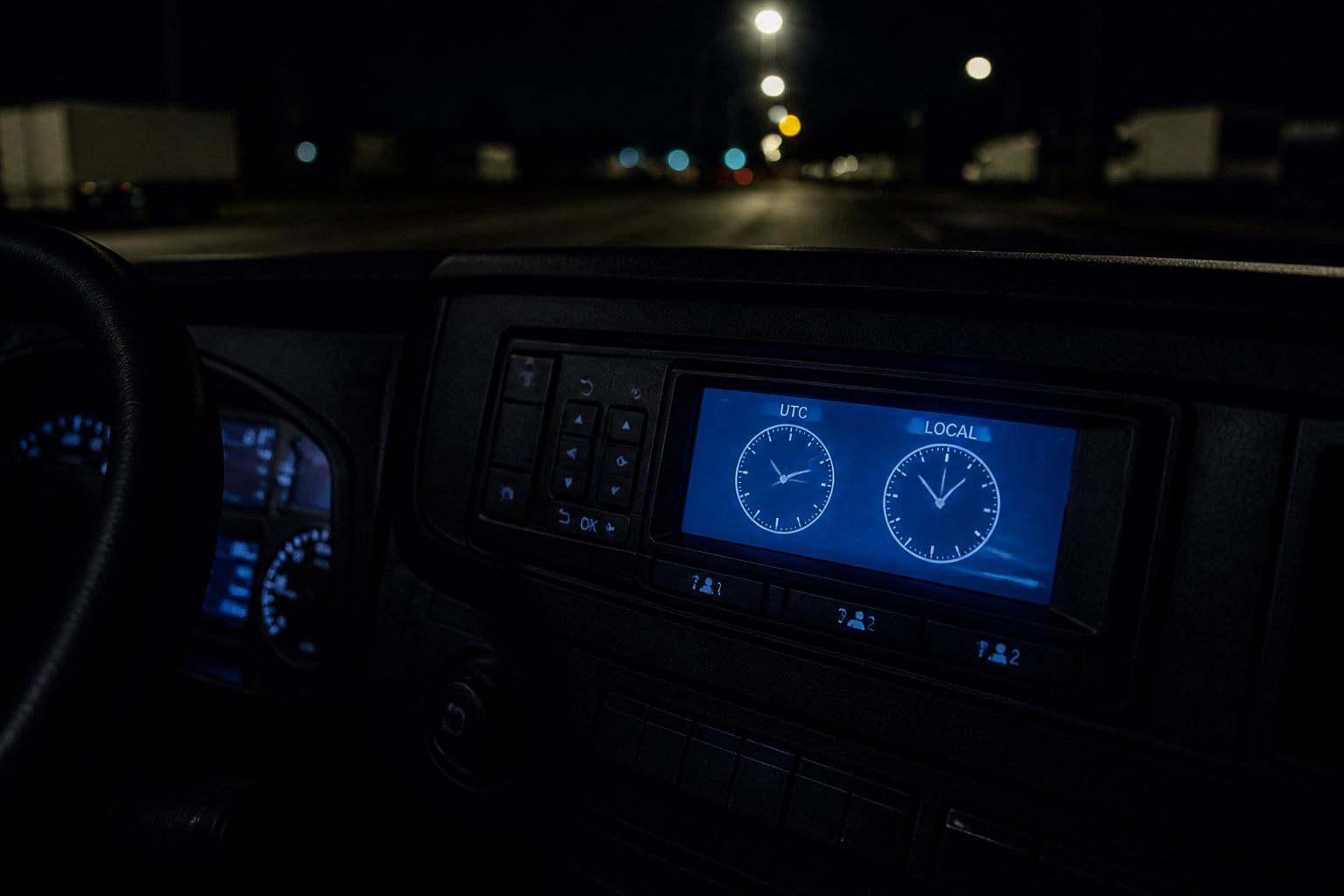
- dziury i skoki czasu
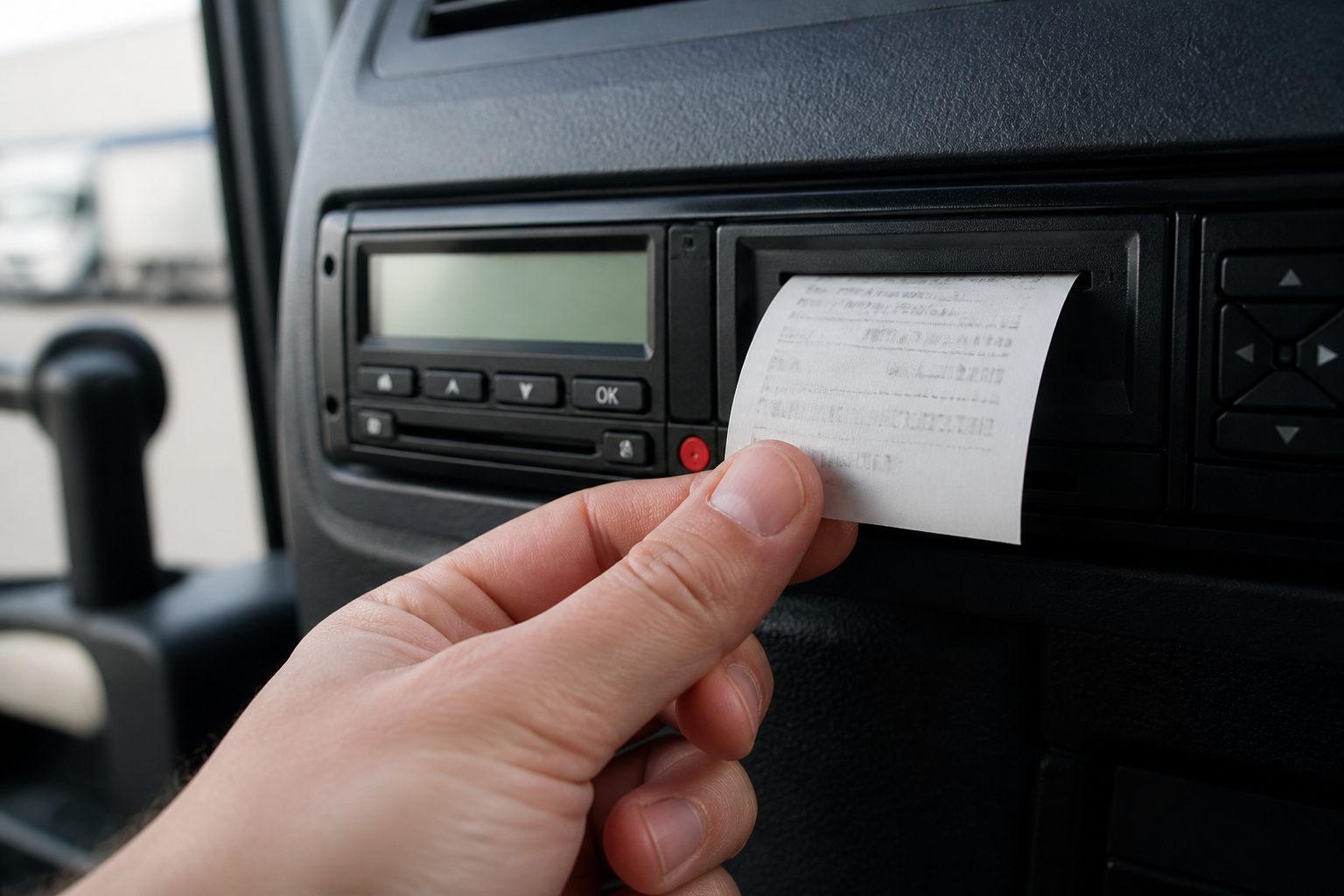
- wydruki albo pobranie, gdy jednostka nie czyta karty
Najczęstsze błędy
Zły tryb (inna praca zamiast przerwy, dostępność zamiast odpoczynku) psuje analizę szybciej niż „nieznajomość limitu 9 godzin”.
Brak wpisu ręcznego po promie, zmianie ciągnika albo okresie bez karty zostawia dziurę. Kartę uszkodzoną albo cudzą widać od razu.
Dzień pełen dziwnych przerw bez notatki wygląda gorzej niż krótki, jasny wpis zrobiony od razu.
Lista przed wyjazdem
- własna, ważna karta w szczelinie
- ostatnie aktywności mają sens
- wpisy ręczne uzupełnione
- znasz plan dnia na wypadek pytań
Co warto zapamiętać
Przy kontroli drogowej DVSA najczęściej łapie niekompletny zapis, a nie „nieznane przepisy”. Oto błędy, które dają opóźnienia i kary — plus dwuminutowa lista przed wyjazdem z bazy.
Przeczytaj cały artykuł, zanim zastosujesz regułę na drodze. Liczby i wyjątki się zmieniają. Jeśli procedura firmy albo kontrola mówi coś innego niż skrót z internetu, stosuj procedurę na piśmie oraz źródła oficjalne (DVSA, DVLA, GOV.UK i właściwe rozporządzenie).
Przy temacie „Kontrole DVSA: błędy czasu pracy i tachografu, które kosztują” pamiętaj łańcuch praktyczny: sprawdź przed wyjazdem, zapisuj poprawnie na tachografie albo w dokumentach, zgłoś dyspozytorni, gdy coś się nie zgadza, i nie ruszaj pojazdu, jeśli wiesz, że to nielegalne albo niebezpieczne.
Jeśli kolega, klient albo krótka wiadomość każe pominąć kontrolę, poproś o to na piśmie. Zatrzymanie w terminie i telefon na biurko kosztuje mniej niż mandat, zakaz jazdy albo wypadek.
Ten tekst jest poradnikiem praktycznym dla kierowcy, nie poradą prawną na konkretną sprawę. Gdy tachograf, waga, dokumenty albo stan pojazdu nie zgadzają się z planem dnia, zatrzymaj się i wyjaśnij to zanim ruszysz. Na drodze odpowiedzialność zostaje przy osobie za kierownicą.

Komentarze
Brak komentarzy. Bądź pierwszy.
Zaloguj się, aby komentować.
Zaloguj się