Limitele de viteză pentru camioane în Regatul Unit: autostradă, drum dublu și celelalte drumuri
Ce acoperă articolul
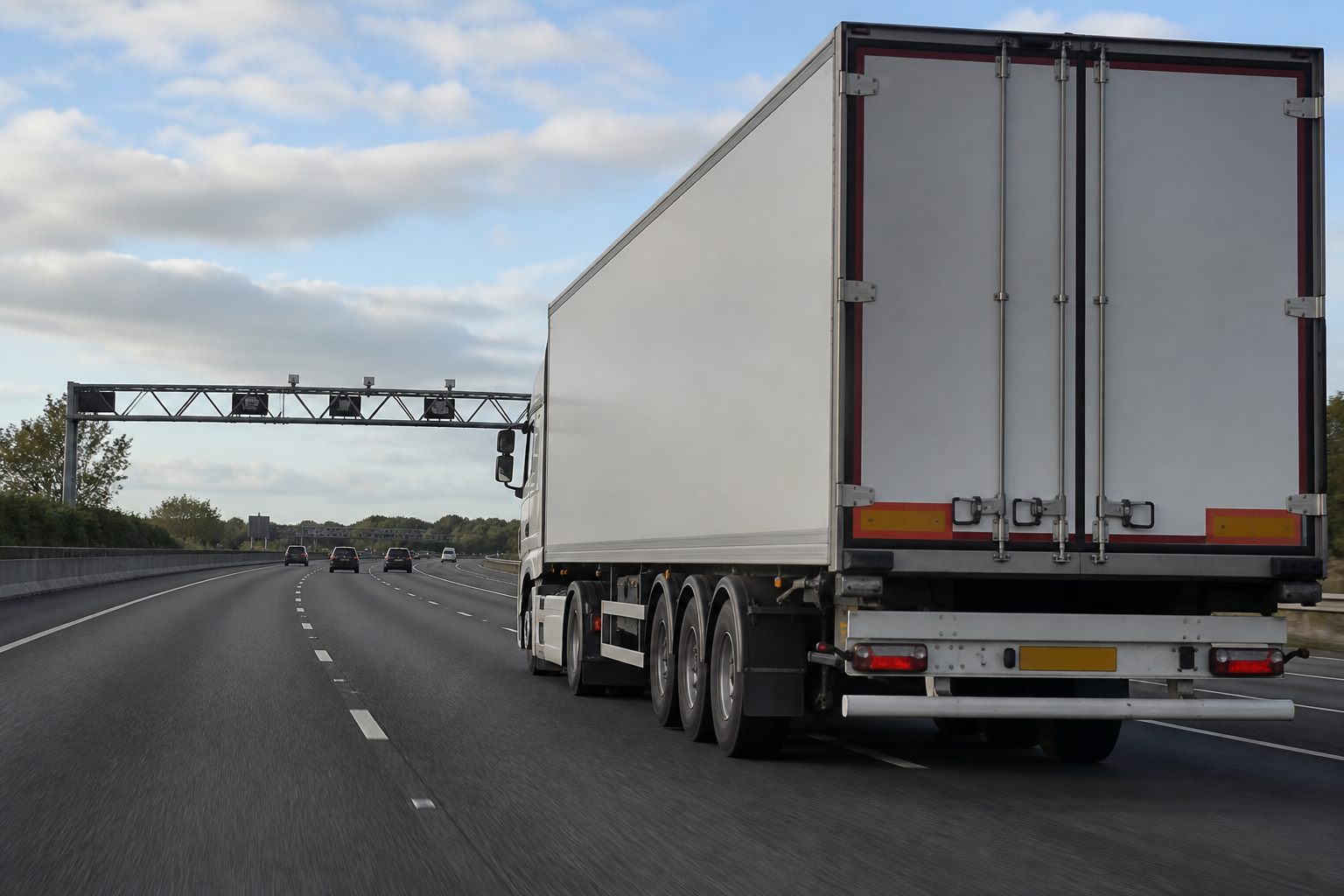
În Marea Britanie, vehiculele de marfă au limite naționale de viteză deseori sub cele ale mașinilor. Pagina rezumă limitele obișnuite pentru vehicule de marfă peste 7,5 tone masa maximă autorizată. Respectă mereu semnele mai mici și verifică clasa exactă dacă conduci bunuri mai ușoare (cifre diferite).
Anglia și Țara Galilor (peste 7,5t)
- Motorway — 60 mph
- Drum cu două carosabile separate — 60 mph
- Single carriageway — 50 mph
- Built-up — de obicei 30 mph, dacă nu e semnalizat altfel
Scoția (peste 7,5t)
- Motorway — 60 mph
- Drum cu două carosabile separate — 50 mph
- Single carriageway — 40 mph
- Built-up — de obicei 30 mph
Dacă treci din England în Scoția (sau invers), limita națională pentru tipul de drum se poate schimba chiar dacă drumul „arată la fel”.
Limitere de viteză
Multe camion au limiter (deseori ~90 km/h / ~56 mph). Limiterul plafonează viteza maximă — nu înseamnă să stai în pin pe ploaie, ceață sau trafic dens.
Greșeli frecvente
- Presupunerea că 70 mph de la mașini se aplică articului tău
- Cifre de dual din England & Wales folosite în Scoția (sau invers)
- Ignorarea unui limit temporar de șantier pentru că „limiterul permite mai mult”
Obicei util
Știi clasa vehiculului și în ce națiune ești înainte de cursă. La dubiu, încetinește la cifra mai sigură și citește semnele.
Ce trebuie să reții
Vehiculele grele de marfă nu folosesc limitele de la autoturisme. Cifrele obișnuite pentru Anglia, Țara Galilor și Scoția — și de ce limitatorul este un plafon, nu o țintă de croazieră.
Citește articolul până la capăt înainte să aplici regula pe drum. Cifrele și excepțiile se schimbă; dacă procedura firmei sau un control spune altceva decât un rezumat de pe internet, urmează procedura scrisă și sursele oficiale (DVSA, DVLA, GOV.UK, regulamentul aplicabil).
Pentru „Limitele de viteză pentru camioane în Regatul Unit: autostradă, drum dublu și celelalte drumuri”, ține minte lanțul practic: verifică înainte să pleci, înregistrează corect pe tahograf sau în documente, anunță dispeceratul când ceva nu se leagă, și nu porni vehiculul dacă știi că e ilegal sau periculos.
Dacă un coleg, un client sau un mesaj scurt îți cere să sari peste o verificare, cere instrucțiunea în scris. Pe drum, responsabilitatea rămâne a ta: oprirea la timp și un telefon la dispecerat costă mai puțin decât o amendă, o interdicție de circulație sau un accident.
Comentarii
Nu există comentarii încă. Fii primul care comentează.
Autentifică-te ca să comentezi.
Autentificare