Tachograph Driver Card Download Every 28 Days: What It Means for Drivers
The 28-day idea
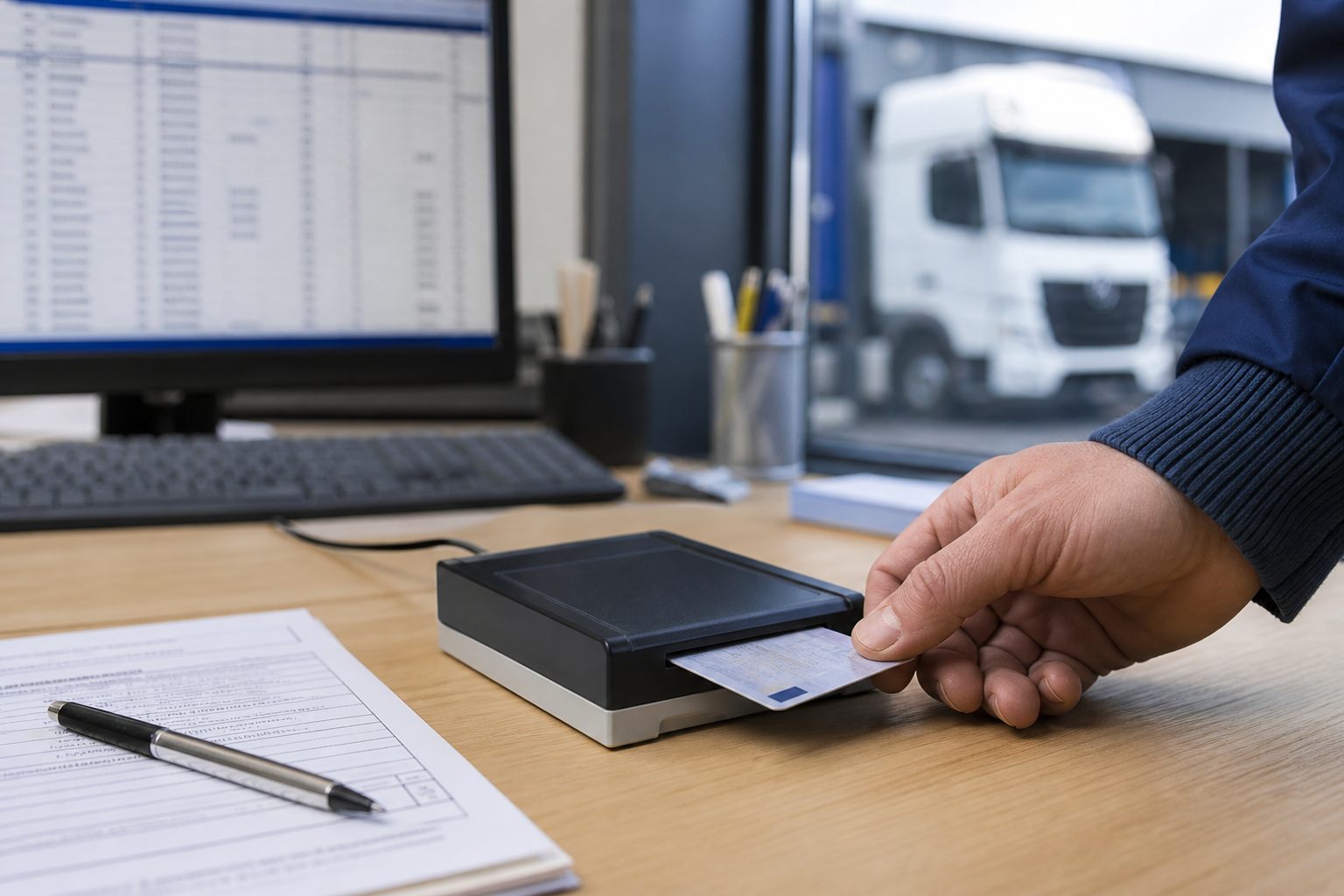
Under the tachograph framework used for in-scope work, driver card data must be downloaded frequently enough — commonly summarised as at least every 28 days — so the company archive stays complete and analysis can run.
This article is the driver-facing side of that duty. Vehicle unit download intervals are a separate (usually longer) operator obligation.
What happens if it is late
- Cards can refuse new data / lock in ways that disrupt the next duty
- Company analysis has holes
- Roadside checks look worse when recent history cannot be produced cleanly from systems
Your practical role
- Present the card when the office / depot asks for a download
- Do not leave the only card permanently in a truck that never returns to a download point
- If you work for multiple entities, know who downloads which card and when
- Report a card that will not download — do not keep forcing it until the VU faults
What download is not
Download is not a substitute for carrying required records at the roadside. Officers may still need the card and recent activity from you directly.
Driver habit
Treat the 28-day rhythm like fuel: if nobody has taken data from your card in weeks, ask before the unit does it the hard way mid-week.
What to remember
Your card must be downloaded on a legal schedule — commonly at least every 28 days. That is mainly an operator process, but drivers who never present the card create lockouts, gaps and roadside pain.
Read the article through before you apply the rule on the road. Figures and exceptions change. If your operator’s procedure or a roadside check says something different from a web summary, follow the written procedure and official sources (DVSA, DVLA, GOV.UK, and the regulation that applies).
For “Tachograph Driver Card Download Every 28 Days: What It Means for Drivers”, keep the practical chain: check before you leave, record correctly on the tachograph or in documents, tell planning when something does not add up, and do not move the vehicle if you know it is illegal or unsafe.
If a colleague, customer or short message asks you to skip a check, ask for it in writing. Stopping on time and a call to the desk costs less than a penalty, a prohibition, or a collision.

Comments
No comments yet. Be the first to comment.
Sign in to comment.
Sign in