Crosswinds and High-Sided HGVs: What Drivers Should Do
What this is about
Crosswinds on high-sided HGVs — especially empty or light trailers. Ice and fog are covered elsewhere.
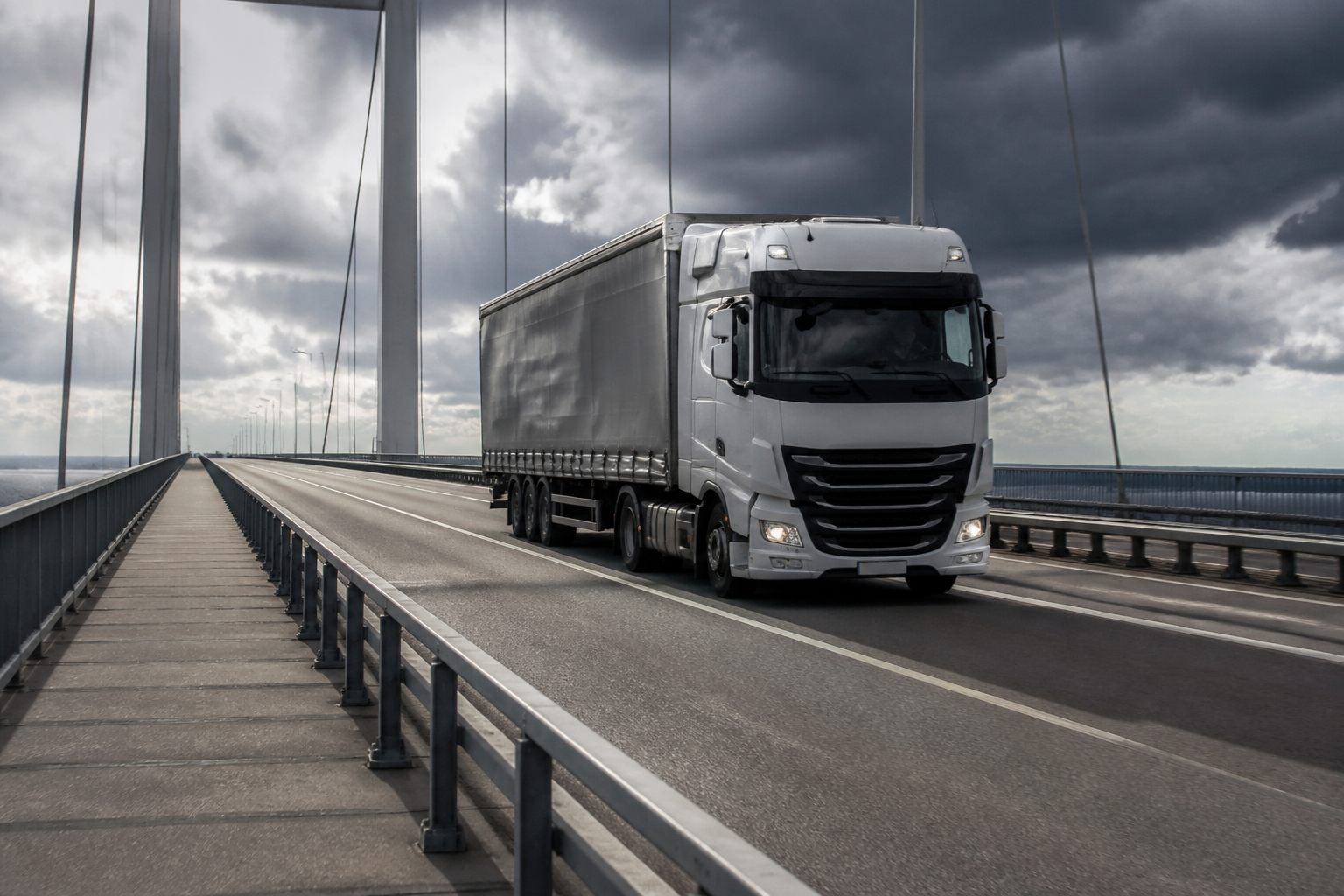
Where gusts bite
- Exposed bridges, embankments, coastal roads, and gaps between buildings
- Overtaking high-sided vehicles that create a wind shadow then a shove
- Empty or partially loaded curtainsiders and box trailers
Driving response
- Reduce speed before the exposed section, not halfway across
- Both hands on the wheel; expect a shove; avoid sudden steering corrections
- Increase gap to vehicles beside you in the next lane
When to delay or divert
If National Highways / police / your operator restrict high-sided vehicles, comply. Fighting a red wind warning to save an hour is how rollovers happen.
Driver habit
Check the wind forecast the same way you check traffic on exposed routes. Empty return legs deserve more respect than a heavy outbound.
What to remember
Empty curtainsiders and exposed bridges are a bad mix in gusts. Slow down, both hands on the wheel, and be ready to park when the operator or road signs say so.
Read the article through before you apply the rule on the road. Figures and exceptions change. If your operator’s procedure or a roadside check says something different from a web summary, follow the written procedure and official sources (DVSA, DVLA, GOV.UK, and the regulation that applies).
For “Crosswinds and High-Sided HGVs: What Drivers Should Do”, keep the practical chain: check before you leave, record correctly on the tachograph or in documents, tell planning when something does not add up, and do not move the vehicle if you know it is illegal or unsafe.
If a colleague, customer or short message asks you to skip a check, ask for it in writing. Stopping on time and a call to the desk costs less than a penalty, a prohibition, or a collision.
Comments
No comments yet. Be the first to comment.
Sign in to comment.
Sign in